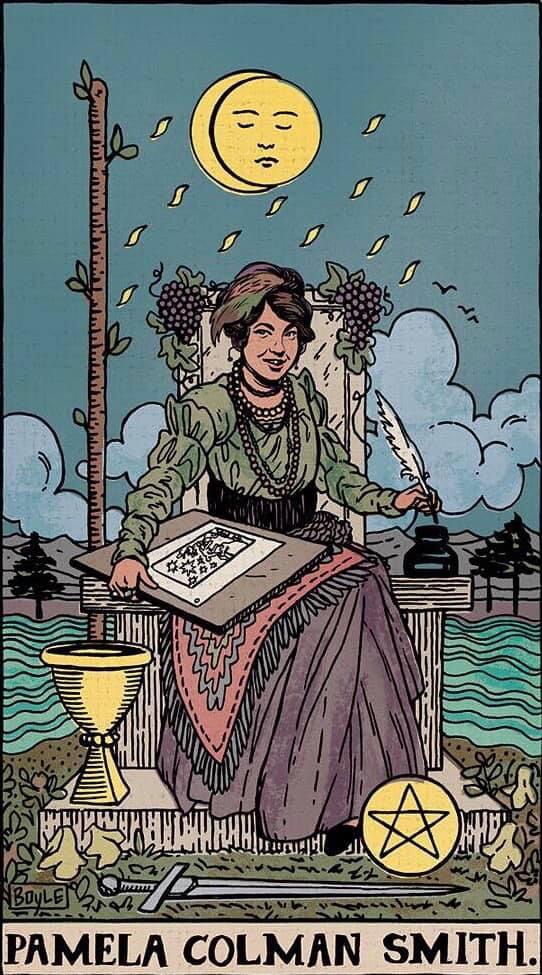
The Kiss That Changed the Prophesy
On this sixth day of July, nineteen-hundred and nine
Greetings, my fellow lovers of myth and lore—it is I, your favorite púca!
Lovers, indeed; the word is fresh on my mind, for good reason. I wish you a most fulfilled Kissing Day, as that is the feast we celebrate today. I share with you now the moment one special star broke apart and was reunited, despite all efforts by the gods against it … for one prophesy is not enough in a world where war fury meets chaos.
See if you can feel the power between our hero and her beloved. I blush … but admit I cannot get enough of their love, even after all these millennia.
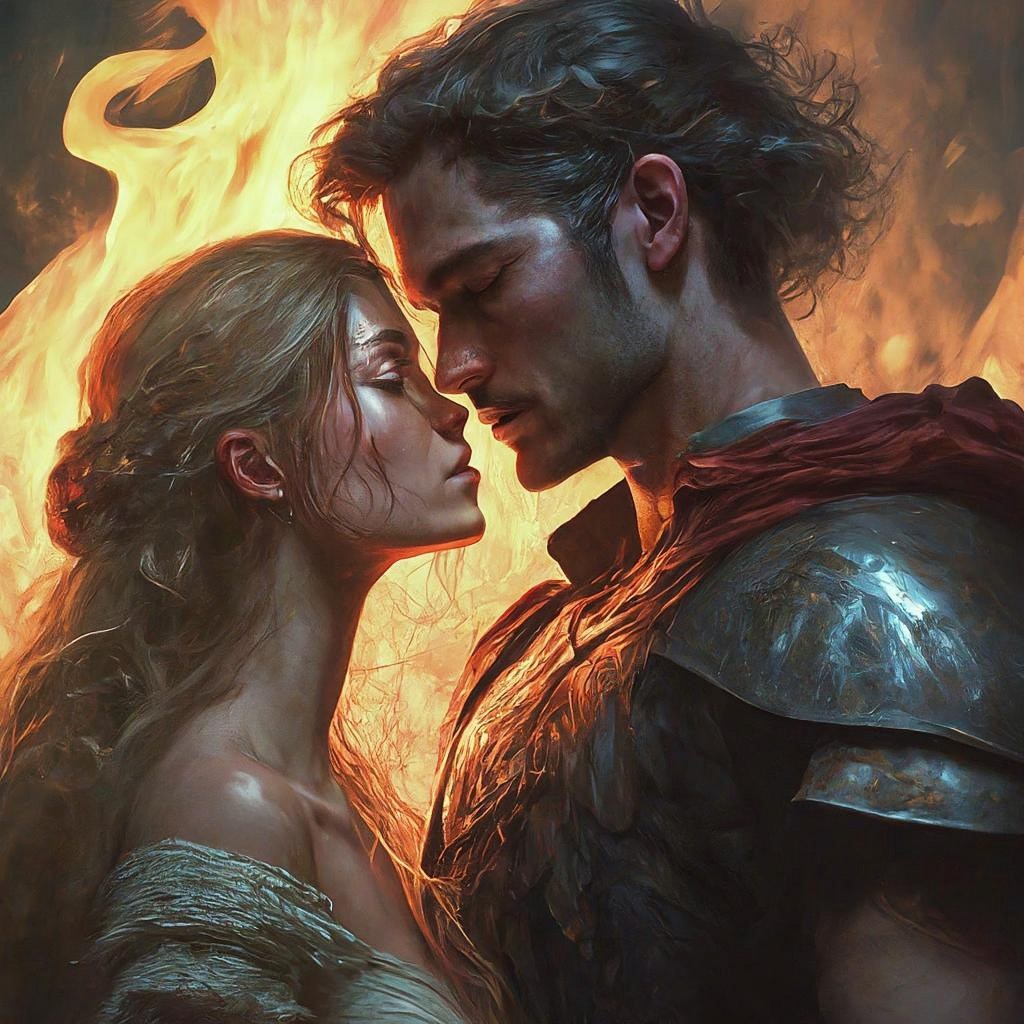
Two destined to meet cannot be kept apart for long …
Cú Chuláinn met Emer later in the evening, his belly full of meat and drink, and he was ready to dance. The Yule log had been lighted to banish the evil spirits. “Luck for the coming year,” Cú raised his cup in her direction. She looked up and nodded, smiling knowingly as he approached. “Ara, you’ll need that luck,” she smirked. “Tús maith leath na hoibre.” (A good start is half the work.)
“Ní neart go cur le chéile.” (We are better together.)
“What should I … call you?”
“My brothers call me Cú, or Hound.”
“It seems wrong for me to call you the master’s name, you are not a dog.” Emer looked at Orla, her wolfhound, and smiled, not wanting to offend her dear companion, but it was too late. Orla turned her head to look away, sniffing in displeasure.
“What does your mother call you?” Emer asked.
“I am Setanta.”
“Then that you shall be to me as well. It is my delight to meet you. Setanta,” Emer’s skirt gathered around her on the floor as she lowered herself into a proper curtsy. He extended his hand to assist her as she rose; though she needed no such help, she took his hand. The spark between their fingers flickered but caused no pain.
Emer’s look of surprise matched his. “That was strange, was it not?”
“Perhaps it is a sign from the gods that combined, we create power.”
“Perhaps it is a sign that we are in danger of burning,” she laughed, pretending to recoil. His expression was serious, in contrast.
“Do you feel heat that way when our fingers touch?”
“Sir,” she started to protest as a lady would, then softened as he curled his fingers around her hand and drew her closer, the spark between them glimmering in proportion to their yearning. “… Setanta. We have much to talk about, to understand of each other. Who are your parents? Where are you from?”
Lashes closed like a fan over his silver eyes, his chin tilting, breath against her skin in a silent pant. “Is binn béal ina thost.” (It is a sweet mouth that is quiet.)
One kiss and the glow swelled over them, an arc of light connecting their future, now on its way.
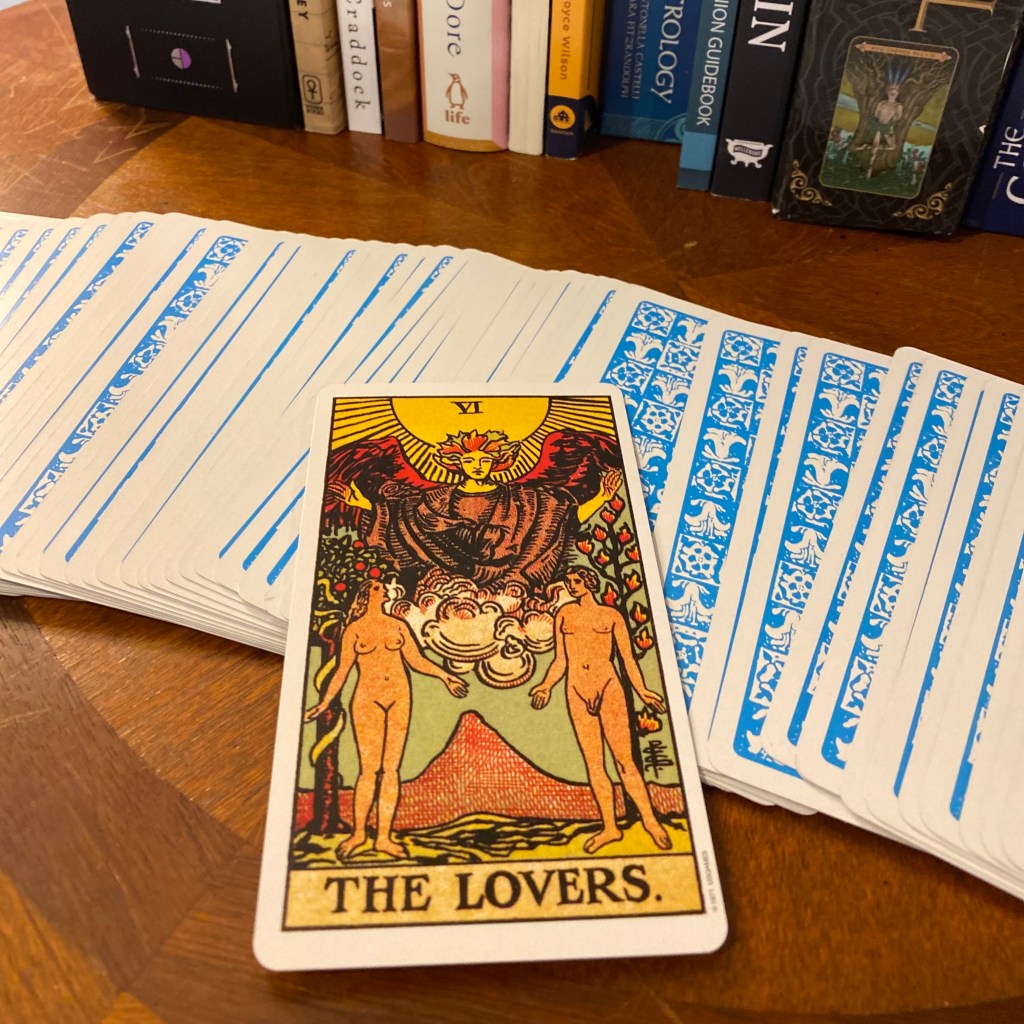
Even my card, The Lovers, does not do justice to their love, endless and written in the stars.
Until next week, heed my advice: Give all the kisses you may, while summer runs wild.
Pamela Colman Smith
Fand learns the sacrifices of love
On this twenty-ninth day of June, nineteen-hundred and nine
Hello dear ones,
We are journeying today to the Year of our Lord 1909. You may trust, though I am in my human form, my púca mind retains the proper amount of wayward insolence.
I invite you along to call upon my friend, William Butler Yeats. WB, he goes by—and I cackle at such pretentious author posturing. I take great delight in calling him Wills, despite his frequent protests against my cheekiness. He has been familiar with me long enough now to know, I do not comply with these fussy conventions, and I call him as I please. Being human is only temporary—as much for you as for me. Lest you forget, I shall remind you: Being constrained by arbitrary external rules is not required for existence.
Now, Wills—I will grant, he does possess expansive knowledge of the ancient world of Ireland and a glorious imagination. But, well … imagination cannot replace a firsthand account, no matter how fruitful the mind. Since I came to meet him, he often generously shares his stories with me, and I pass time in his presence quite peaceably, his flair as an orator as compelling as his tales.
All was well until one day, when I called upon him and found him eager to share his new epic.
“The Only Jealousy of Emer, I have titled it!” he exclaimed, the flush of pride pink on his cheeks. It was of course merely a draft, but its very name gave me instant pause. For how could he possibly have a story straight after thousands of years? Rumors, lies, exaggeration, and conjecture! I decided to let him tell it, however, and granted him the benefit of my silence—at least, until I had heard his account.
The truth of it was, I feared what he would speak. The characters involved were more than mere shadows and ghosts—they were flesh in my world. Emer, the Mistress of the Six Gifts of Womanhood. Cú Chuláinn, the Hound of Ulster, mighty demigod and son of the Sun God Lugh. And perhaps most fearsome of all—Fand, the sister of Queen Áine. Dear Wills, hers is not a name with which to take liberties!
But what could I say? Nothing, indeed. I sat politely as he cleared his throat, adjusted his spectacles, and began his narration.
Do listen in …
It was in a time not long past making marriage vows to Emer, when Cú Chuláinn set out with his foster-brother and fellow Red Branch warrior, Conall Cernach, on watch of the king’s land. In a short while, they were shaded by a large flock of white seabirds in flight. One in particular wore a gold chain around its neck.
“I heard told that goddess Rhiannon had possession of a flock of magical white birds such as these for her honor,” Conall said, shading his sky-blue eyes from the sun. The two warriors stood, enthralled by the majesty above them. The birds landed then for a moment’s repose in a glistening lake nearby.
“My Emer shall have one as well,” Cú said, narrowing his gaze and moving with stealth toward the green banks of the water. He soon startled the flock, and they rose as one, but it was still easy to target the one adorned in gold. Cú retrieved his slingshot from his pack, aimed, and plucked the seabird from the sky.
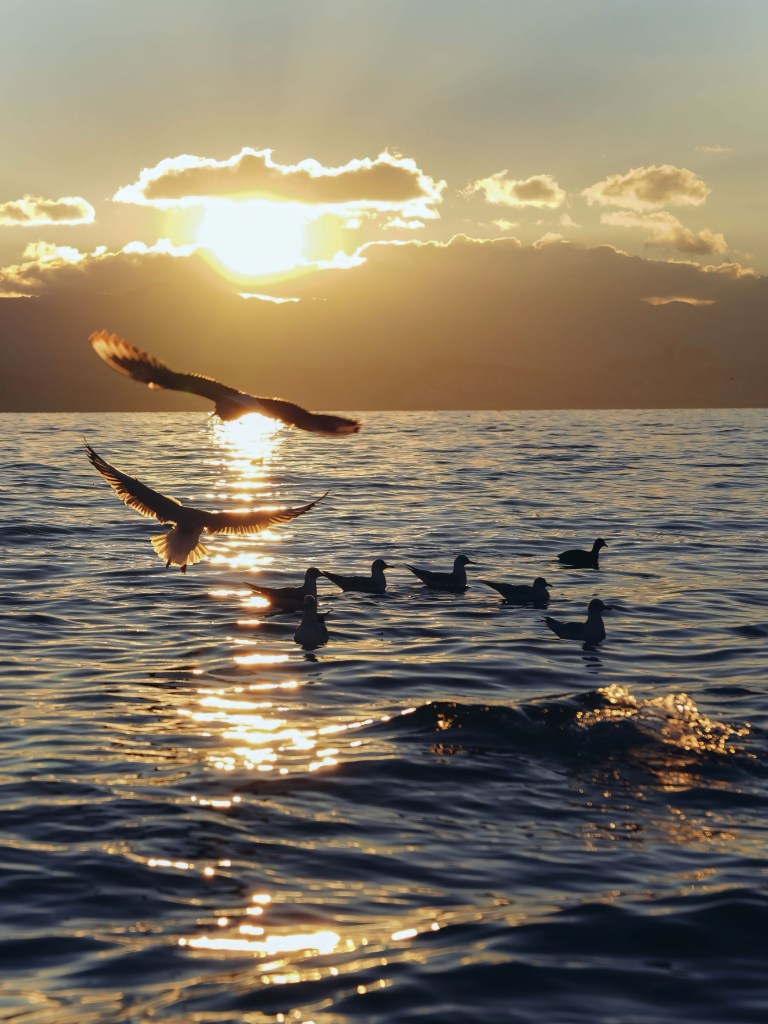
Fand and her flock upon the lake
In the instant before the bird’s body was to hit the surface of the earth, it transformed into a beautiful—if terrifying—woman. She was no doubt war-skilled but lissome, too, her body curving and soft like wings. Her downy hair stood as a plume on her head, fierce and regal. Her liquid mercury eyes tracked the hero, her head tilting to scrutinize him as he crouched into battle position. He prepared to defend himself against the enchanted creature before him.
“Cú Chuláinn,” the woman spoke in an ethereal chaunt. “I have thought your honor impeccable from your tales, and yet, as you shoot me from the sky, how should I believe it?” She held her palm over her shoulder without expression of pain, but plainly, hot blood trickled from between her fingers. Her wound healed quickly.
This surprise, in addition to the shock of the bird’s transfiguration, kept the men from offering their prompt assistance to the wounded lady. Cú was the first to realize his boorish mistake. For one so large, he moved with the silent grace of a wild thing through the forest, quick, with a heightened awareness Fand could nearly see within his form. In swift motion before her, he bent the knee, palm up in supplication. “My enchanting lady, please, grant me forgiveness for my carelessness.” He then slowly raised his bowed head to meet her gaze. “Nothing could foretell that you were more than a simple seabird I could bring to my beloved.”
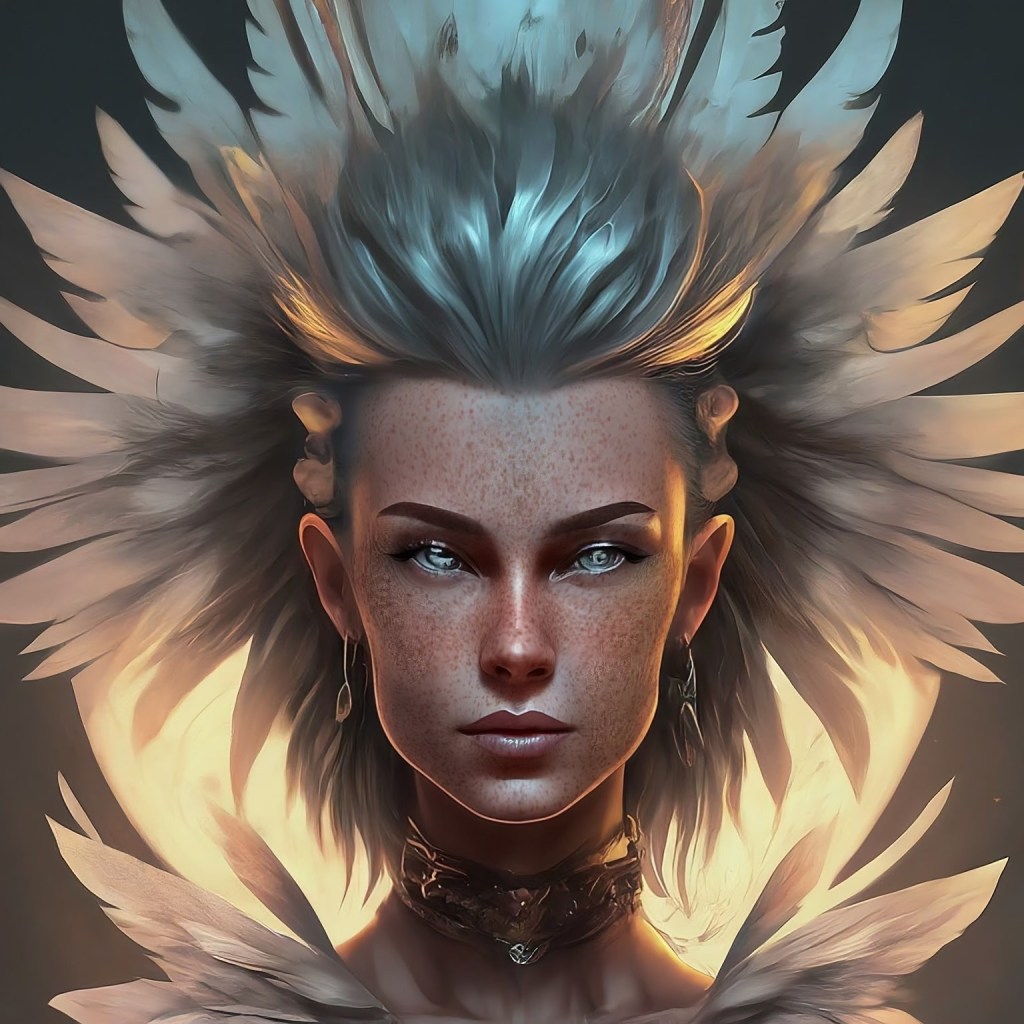
Fand, the fairy sister of Áine, fell in love with the hero Cú Chuláinn
Her fingers, as fine as white feathers, grazed the gold chain at her nape. Her pink lips crimped, curving near into a pout as she beheld him: this legendary demigod, the Hound of Ulster. Even within the fairy realm, there were none left unaware of his courage, his chivalry. Then there was the matter of his charm. He held her stare now without reserve. Fand could feel it, it was just as she’d heard told: The undeniable enticement between them sparked heat like invisible filaments, connecting their forms.
Fand tried to tear her gaze away but found she could not—not until she had memorized his unrivaled magnificence.
Golden was the aura that ringed his head, his heart-shaped, boyish face framed in unruly multi-hued curls. His eyes contained storm clouds that emerged and changed with his thoughts, moody gray to polished iron, mesmerizing. When he smiled, sheepish, a dimple cleaved his sturdy chin, a linear match to the one that split his forehead into a widow’s peak. The spot begged to be touched; Fand imagined her soft fingertip upon it. His skin, a tawny cache of honey, could barely contain the warrior’s muscles—his war fury, the ríastrad, never far below its taut surface.
Fand often took her seabird form, as it allowed her to travel far distances in obscurity, but as a Manx sea goddess, there was little that could effectively hide her exquisiteness. Known to the world as the pearl of beauty, the stunning sister of Queen Áine had long ago caught the eye of Manannan mac Lir, the mighty Sea God. Without a second thought, the master of the ocean had abandoned his vow to his ancient wife, the Cailleach, goddess of winter, causing great upheaval in their realm. Fand’s beauty and allure were so great, the potent ocean god found himself powerless in love.
Fand quite expected Cú Chuláinn to respond as Manannan and all others did. Yet somehow, she could sense … he was not falling. He was polite and respectful—but quite oblivious to her desire. The hero did not offer himself up to her whims as the others had. A stripe of annoyance within her quickly ignited as offense, then burned to wrath.
“How dare you, demigod? You injure me first with your weapon, then wound my pride with your impudence.” Cú’s face changed then, from apologetic to wary, but he did not move.
Conall, who had stepped back when the goddess had changed form, concealed himself in the stand of trees just beyond sight, waiting to see what would occur. As the fairy’s power rose with her anger, he saw his foster-brother Cú weaken, his knees buckling as the air around him shimmered with malevolence. Fand was furious, and thus Conall could still hear her voice carry on the wind to his ears. She said, “You shall be my new lover, Cú Chuláinn. Rather than I as a prize for your wife, shall you be my prize instead!” The fairy goddess then absconded with the incapacitated hero, in a blink.
Conall ran at great speed for Emain Macha, to tell of what had happened—how would the Hound be saved? They did not know where to find the fairy realm, nor did they know how to break the spell she had put upon him. He found Emer in her circle with the other ladies of the court, toiling at their needlepoint and chatting idly.
“Conall!” she exclaimed when she saw his ruddy face, his lungs straining from the race to her door. “What has become of you, that you are in such a state?”
He recounted what had transpired at the lake. Emer tilted her chin and looked to her sister, Fial, whose eyes seemed to alight with the thought of the challenge. “Shall we go after him? Do you wish that, Emer?” Fial asked. The ladies’ bodices cramped at capacity with the breath of their excitement.
“Yes, let us prepare for battle. Gather the others,” Emer said, her voice frozen over in a way Conall had never heard before.
“Forgive me, my lady,” he said, “I shall alert the king.”
“Conall—” Emer stopped him before he took off toward the king’s dun. “Please tell King Conchobar, we shall not require his assistance for this confrontation. I shall call upon my grandmother before we depart.” Conall nodded his understanding and disappeared from the threshold.
Before long, Emer—garbed in leather armor, astride her large dappled draft horse—led a battalion of fifty warrior-women armed and angry. They had sought direction from Emer’s grandmother, the goddess Eirú, who told them to mount the magic boat of bronze at the lake where last Conall had seen Cú. It would take them to the realm of the sea goddess.
Upon their arrival, Cú prepared to defend Fand against the women with gold clasps upon their armor and weapons to avenge the Mistress of the Gifts and retrieve her husband. They roared with battle cry and descended. But Emer held her hand aloft and they ceased their din, waiting for her word. “Cú Chuláinn,” she called out to her love. He answered her in puzzle, as they had once taken great joy to share, the sweet speech of the gods. He answered quickly: “There is nothing my spirit could wish for that this great goddess lacks.”
Emer looked with a discerning eye upon the fairy, her silver eyes, her white plumed hair, her fine body—and found her, frankly, unimpressive. “In good sooth, the lady to whom you now cling seems in fact no better than I. But the new is ever-enticing, and the old does grow over-familiar. We once dwelled together in honor, Cú Chuláinn, and could do so again if you should find favor in my sight. But your moment of choice is now and forever sealed here.”
The warriors grumbled behind their leader, unsure why she would give the hero a choice, when he was so obviously held by enchantment and not by his own will.
Cú Chuláinn looked upon his wife, the wise, the beautiful—the unparalleled Emer of Ulster. The spell was broken. She had come to him, despite his betrayal, without knowing how long before his prophesy would steal him from her world forever. Wasted time, it was, in Fand’s bed, and yet she would extend her forgiveness, for her wisdom and beauty were matchless. “It is you, Emer, that finds my favor upon your sight, and shall find it as long as there is pulse in my heart.”
Fand’s face contorted in an indignant fit, her hands poised upon her curved hips. Irate, she challenged, “Thus give me up!” It was to her shame to be the one deserted, and so she was quick to reject the hero. “You must go with her at once.”
Emer looked upon her husband, who had seemed more than content in the gossamer bed of the fairy, whiling his time without thought to anyone before her arrival. In that moment, she felt a doubt. “Nay, it is best for I to be the one deserted.” She turned to go and herded her warriors along before her toward the portal door.
“Not true!” Fand shouted, her love for Cú Chuláinn now sullied, her regret and ambivalence confronting her. Why had she wanted him from the start, if not to win him beyond the love of Emer that all said was unbreakable? Why would the maiden of the gifts sacrifice him now, if not to make her look the fool? “It is I who calls this affair be done.”
Manannan, as heartsick as ever over his fairy love, took pity on Fand in her tumultuous state of emotion. He stayed within the mist unseen to all but her. “Will you return to me, my love? Or carry my fostered boy, Cú Chuláinn, in your heart with unrequited longing?”
“In truth,” she said, with a sharp tone of resignation, “neither of you is more noble or more worthy than the other. But I shall return my affections to you, for you have none other more deserving of your love than I—but Cú Chuláinn has in Emer a love that will outlast … perhaps even the prophesy. None can undo what the Fates have brought together in those two—not even I.”
Manannan was relieved, for any reason Fand gave would have sufficed, so long as the result was that she remained his. Yet he worried: Would Cú Chuláinn feel shame and infect his place in Emer’s heart with unraveled confidence? Would Emer truly be able to forgive him for his indiscretion? Regarding the matter of enchantment, it was usual that the demigod could break through most glamours with ease—not true in this case, or had he, and just decided to stay? No, this would not do at all. Manannan settled his Fand back in their home, and boarded his boat, Wave Sweeper pointed toward Emain Macha.
Upon finding Emer and Cú Chuláinn in their dun, Manannan took hold of his mighty cape and waved it like a banner over their threshold, erasing the memory of such unhappy times—for their good, and the good of all involved.
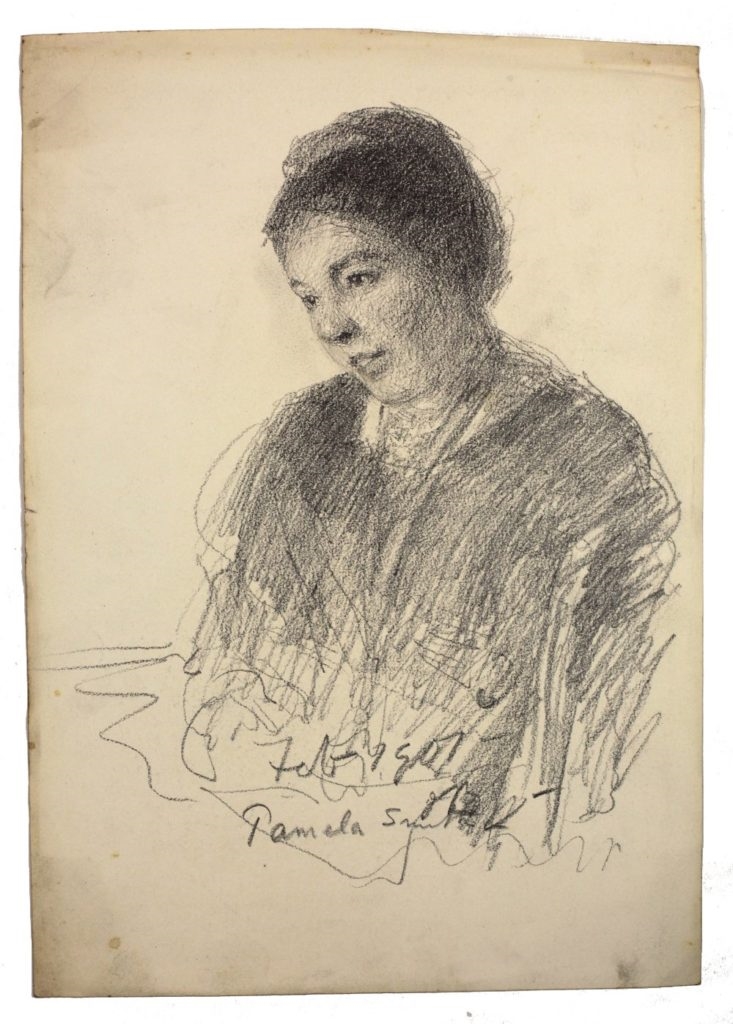
Myself, in my human form, drawn by Yeats
And thus, Wills ended his tale, closing his portfolio and pausing, eager for my response. I nodded my unequivocal approval, giving him credit for such splendid detail. But there was a morsel more to the conclusion. You might find it pertinent, though forgotten by the translations. The rest unfolded thus …
Emer looked with loving eyes upon her husband as he slept that night, the moon upon his skin like gilt. She smiled to herself as she watched his chest rise and fall, enticing and hale, released from all the wasting sickness of nefarious spells.
“Wise is the woman who only accepts those willing to sacrifice for sake of her love,” she whispered. “Fand, you will never learn.”
I swear upon my cards, what you have read is the truth … well, as close to the truth as a púca may get.
Until next week, my beloveds.
Pamela Colman Smith
Pixie’s Mystical Posts is a weekly short fiction feature written by Shelagh Braley Starr, based on characters from her novel-in-progress, Emer of Ulster (working title). Pixie is an ancient Irish púca in the court of the fairy queen Áine in the time of the Ulster Cycle of Irish myth. She also exists as mystical artist Pamela Colman Smith in 1909 London and counts among her friends the occultist AE Waite and poet WB Yeats. You can join the newsletter to keep up with Shelagh, Pixie, et al, RIGHT HERE. Thank you for reading and sharing!
The blood of Summer Solstice
On this twenty-first day of June, nineteen-hundred and nine
Sun salutations to you, my respected friends.
I bring you tidings of the Summer Solstice, a day upon which we celebrate the power of light. And one would be remiss to celebrate such a thing without mentioning the power of Her Majesty, Queen Áine, goddess of summer. She toils mightily, far beyond what the mortal eye can perceive. Though she may look elegant in her flowing robes, her golden-red hair radiating like the sun itself, our resplendent queen harnesses within her enough power to shield her people from all manner of vile and unseen monsters that arrive in the darkness.
And thus begins the tale I regale you with today … in greatest honor of the immortal Light-Giver.
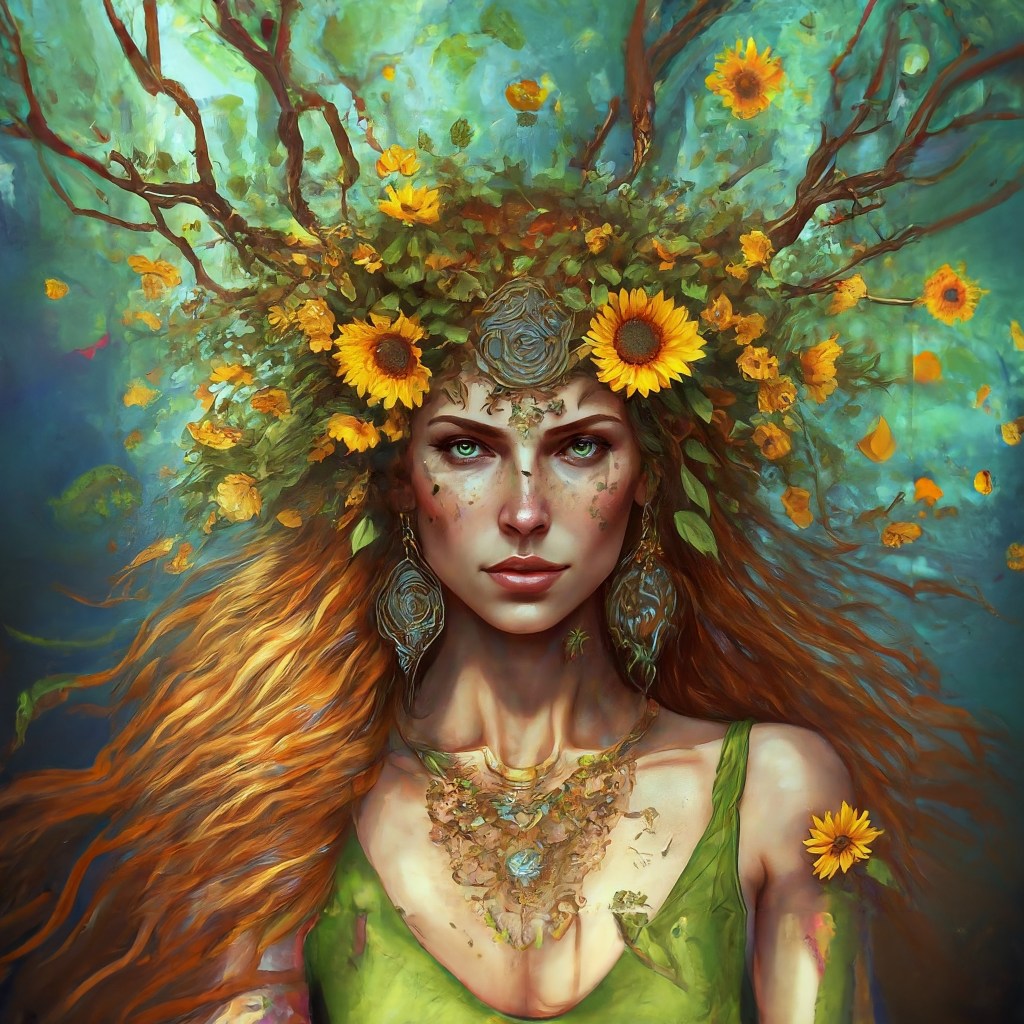
Queen Áine
“Let us welcome the bountiful promise of a new day. May the sun bring you sacred warmth and abundance.”
Queen Áine looked wan and exhausted. She lowered her lithe arms, her Summer Solstice blessing upon her people complete for another year. If only they knew …
The fulgent sun hung motionless at its highest point, its long-fingered rays burning the air to stillness for the moment. Hundreds turned their faces to her as sunflowers toward the sky. The mortals gathered upon the hill, kneeling and silent before the summer goddess. How sincerely they loved and worshiped Áine, queen of the fairies, patroness of the crops. They waited all year for the longest day, when she would grant them her blessings. They prayed for a strong harvest. They prayed for fertile grounds—and fertile women to swell their clanns. The people lighted her sacred fire and held endless procession, waving their torches of straw over fields and livestock, in hopes that they might thrive. They sang.
“Lady of light, bring us the power of the sun.
Protect us with your life force.
Without your light, there is no life for us.
Let your season take its course.”
The goddess swung her sun-woven cloak and began her walk from site to site across the land. Though she far preferred her duties as goddess of desire, Queen Áine took to her solstice tasks with great pride, waving a graceful arm over the people and across the fields, blessing the land, nurturing the crops to continue their growth. She kissed her fingertips and blessed each furry head, looking deep into the eyes of each cow, each lamb, beholding such gratitude in their simple visages. How honored she was to hold them all in her embrace, mortal and creature alike. She felt relieved they were safe once again.
It had not been nearly so easy as that, however. It was her most challenging task to protect them from evil beyond human sight. At this time of year, when the breezes were warm and the crops pleasing on the tongue, humans knew not the lengths Áine went to, to grant their safety from the surge of potent spirits on summer nights. Evil influences grew most irrepressible in the heat.
Only the night before, she looked up at the moon, a distinct pattern catching her green eye. Its yellow hue did not bode for peace, but rather its ominous glow alerted the goddess to trouble already on its way, dark gouged patterns showing the short path taken.
“Guards,” she yelled. She would need all reinforcements for what was to come.
“What disturbs you, my queen?” The head guard bowed low before her flower-festooned throne.
“Solstice will require your full regiment, Eachan.” His name meant Horse Lord, and surely it was true—he was the finest rider, as only would be fitting for a commander of the queen, whose shapeshift abilities transformed her into a glorious red mare.
His face took on an iron cast, and he nodded, resolute. “I shall have the troop prepared and at the ready, my queen. Should the need arise—”
“Oh, it will arise, Commander. Let us have no pretense between us.”
He nodded again, bowed once more, and was gone.
“Púca!” the queen tossed back her head and roared into the sky. Instantly, I appeared before her, grinning, my feet tangled in a slovenly jig.
“Yes, my dear queen, what shall I proffer on this fine Solstice Eve?” I did not expect what she said next.
“It seems we are in for a difficult transition, my púca. An attack from the chieftain of nightmares and his flock is imminent.”
“He is not welcome here; he is well past his border! How can it be?” I entreated her.
“Aye, look for yourself,” she said, pointing to the sky with an elegant finger. “The path of blood marks the yellow moon.”
“Indeed, for even a fool such as me can see it.” I put my paws to my cheeks, hot with shame for questioning her. Luckily for me, she was far too preoccupied to scorn me for my insolence.
As the fact sunk in, I closed my eyes and shivered. I could not recall a visit from the Abhartach in the last millennia. But such a summer solstice attack was perfect strategy—for his sluagh, his flying horde of unforgiven dead, seeking vengeance upon the innocent for what they felt were unfair deaths. And he himself just wanted blood. They would prey upon the guileless throngs gathered to honor the queen upon her feast, and spirit them away to—to feast upon them. I gulped.
There were few monsters as fearsome as the Abhartach—the vicious, bloodthirsty tyrant. Long ago, he had been a violent clan chief, bringing destruction and fear to his own people. The warrior Cathain killed and buried the man in the earth. But Abhartach’s greedy fingers dug and dug above him, until he was able to raise himself out of his grave, now overwhelmed by the desire for blood. And so Cathain killed him again and again, the final time with a yew-wood sword, buried upside down.
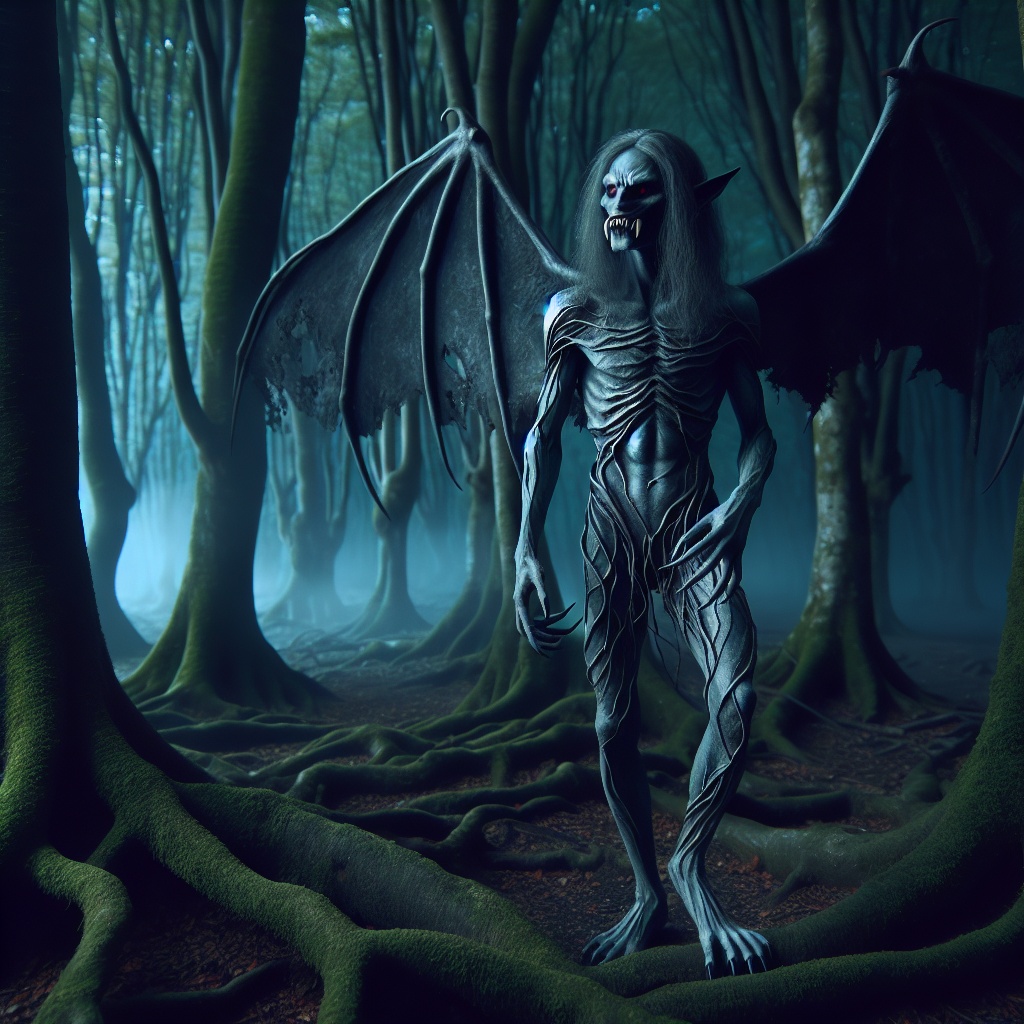
The bloodthirsty Abhartach
The demon had been gone for so long, it seemed barely the memory of his cruelty remained. But still, I whimpered.
“Come he does, with his wicked dead upon wing. We must prepare,” the queen decreed. I bowed, looking up over my eyelashes at her face, gauging whether to inquire. Given the dire circumstances, I decided to dare. “Shall I call upon your sister Fand and the Graces, my queen?”
She did not hesitate as I rose to hear her. “Call everyone. Ring the bluebells. We must protect the people.”
We gathered a short time later, on the hill in force of numbers. Queen Áine summoned the full measure of her power, readying for attack from any dark position. The stand of trees on the edge of the clearing wavered, shadows dancing. Birds called, animals lowed, moaning their warnings to the queen. And then, there they were, the Abhartach and his swarm of flying beasts—talons bared, tendon-taut wing beats whipping a wind from the still air.
As they made ground, Queen Áine held a tight harness on her power, her skin glowing. We felt a slight quake in the earth beneath our feet as the dueling powers converged—Abhartach against Áine. Her light became fire.
“Ready yourselves!” she thundered. With a flair of her cloak, she became a red mare and charged at speed toward the landing of the horde. She tore at them with jaws of sharpest might, ripping their wings off, spitting them to the blood-sodden grass. She withstood their mauling slashes and bites, trampling them as fast as they could set themselves upon earth. The monsters encircled her, but she broke through, hooves kicking, streams of fire blazing from her nostrils to the engulf the fiends, turning them to piles of ash. Her guards took down nearly all the sluagh, fearless with their shimmering yew-wood swords.
Until all that remained was the Abhartach.
“I have waited long enough!” he growled. “If it be your feast, Áine, then sure there will be plenty for me as well!” His brazen laugh echoed in the vale.
I looked up the incline to the sacred hill, to be sure no unsuspecting humans had arrived early. There, I caught a terrible glimpse—the oldest woman making revolutions around the unlit wooden pyre upon her knees, beginning her supplications. I thought to run toward her to protect her but froze. Perhaps it was better not to draw attention to her there.
Queen Áine sought to keep the dreadful chieftain’s eyes upon her alone.
“If it is chaos and death you seek, demon, you will find it here!” she decreed, taking her humanlike form once again. She held out her arms before her, hands wide, and tossed her hair. She was a woman in bloom—elegant, bold, defiant. Deadly.
The Abhartach focused only on her—her long white neck, unsullied as a swan’s—his sharp, blackened teeth bared in voracious anticipation. The blood-lusty creature hovered, gliding toward her at such an unnatural pace it blurred his form. We stood frozen, unable to assist the queen, for the Abhartach was too fast. We became aware of a sensation of time bending, our limbs weak and sluggish. Only our eyes remained unfrozen, darting with mounting dread from one to another. As he neared her body, she exploded with fire, the blast throwing the beast onto his back. She held him with streams of molten flame. The freeze released our limbs, and Eachan ran toward the monster, stabbing him with the yew-sword he wielded. We stood transfixed as the Abhartach’s body boiled and contorted, his screams echoing through the valley. The few remaining sluagh took flight, gaunt eyes looking back over bony shoulders, unsure of their safe escape.
Queen Áine discharged us from our battle positions with a wave of her hand. Eachan and his men stepped forward as one, hefted what remained up to their shoulders, and turned toward the glen, ready to restore the Abhartach to his upside-down grave. Áine sighed, releasing her lungs deeply before she spoke.
“As Lugh, the god of the sun, once told me: Let the light shine for the day we have. We celebrate the solstice, fully aware that the slow return of the darkness must be accepted. It is never far, after all.”
The sun rose from the east at that moment, casting perfect light upon her face. She raised her chin, letting the warmth renew her before she began her ascent up the hill toward the gathering.
“Let there be peace and prosperity, in our land and in our hearts, for another year.”
Summer Solstice blessings upon you, dear ones.
Until next week, your loving sister,
Pamela Colman Smith
A púca in Queen Áine’s court
On this thirteenth day of June, nineteen-hundred and nine
Dearest,
Aye, the warmer weather is upon the great green isle of Ireland—is there anything more beautiful than the greening of the greenest place on Earth? These warm days were once among my favorite of the year, indeed. For I am a púca, the spirit of mischief personified, whose great joy is derived from spying upon the farmer hard at his work and interrupting his progress. I once found amusement and hilarity in distracting the young human men as they toiled. Of course, despite my efforts, the golden harvests grew rich in prosperous seasons.
But I will tell you the truth of it. I do not exist merely to entertain myself. My true job was of contradictory purpose to my pleasure, calling me to duty after harvest, on Samhain when the moon rises, its eerie glow floating upon the mist. Once the farmer had taken all he could from his fields, what remained was known as the púca’s share—which I collected with exact precision. Each grain of wheat, every tendril of cornsilk, they counted toward peace. It is arguably a job of far more importance than I should possess.
The humans believe it is an offering to me, to save them from my pranks. But oh, what a lowly creature am I—if only they knew! I was merely a messenger delivering a share of harvest, a peace offering, to the seething immortals banished beneath the floor of the sea. Do you know of the Fomorians? After the Sun God Lugh slayed their mighty king, the three-eyed giant Balor, with his slingshot, and their grotesque supernatural race fell in the second battle of Moytura to the mighty golden gods of the Tuatha de Danann, the impartial fairy Queen Áine was tasked with delivering their portion of harvest—in a gesture of respect to satisfy their needs and keep their restless spirits from rising again. And as her attendant, as foolish as I am loyal, this fraught job became mine.
It was admittedly not much amusement for a púca such as me. I had delighted in nothing more than to lure an unsuspecting drunkard onto my back for a ride he would swear nearly meant his death—did I mention one of my great skills as a shapeshifter graces me with many forms, including that of a black stallion?—but none would believe him for the stench of the fumes of liquid grain, rising off him with a shimmer. Little did they realize, the spirits your man imbibed could not have saved him from the spirit that scared him beyond his wits. I cannot suppress the giggle it gives me, when at sunrise, the lady opens the door to find her beloved in a heap, sunk in the mud, disheveled and rubbing his head, unable to decide whether his ride was real or just a bad dream! I took the shape of a rabbit and hopped away without notice, my pride swelling. My lark had me laughing till I had to stop and catch my breath, leaning on the moss of a stone on the edge of the glen.
My days were mostly mine; I cannot say my role was too heavy for one such as me. I lived all year, save one day, as though it were of no matter where I was, or how long I stayed. So long as I returned from my misadventures in time to retrieve the harvest share and deliver, Queen Áine minded not my business. I did spend idle time in her court as well, making jest and amusing her, for I love her—she is my beautiful Sidh queen, and I am grateful for her intercession whenever I have had need. Do not misconstrue Queen Áine as weak or lax, however; her beauty belies how strong and terrible a queen can be. Once, a human man mistook her for a small one who could be overcome by his desires, but as he forced himself upon her, he found her true form. She bared her teeth and tore his ear from his head. As she spit it onto the barren ground, his scream carried throughout the vale, his terror only matched by her fury—and right so. I make this point so as to say, as dearly as I love her, I am dutiful out of shrewd intelligence. For wisdom’s sake, I do not cross my queen.
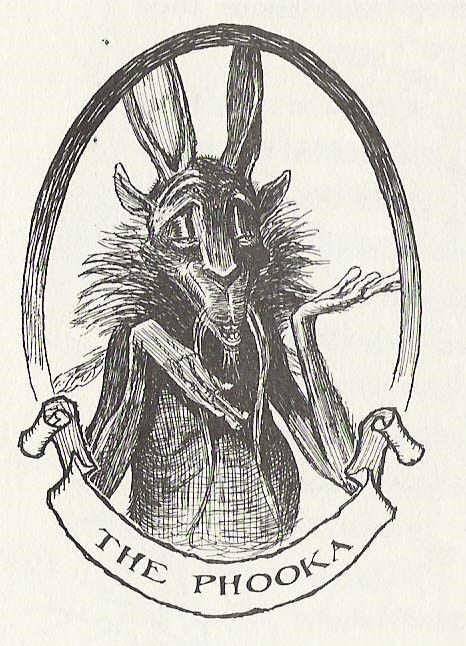
As the immortal years passed, however, I found myself drifting in my satisfaction, becoming as restless as the Fomorian monsters imprisoned beneath the crust below the waves. I could see the darkness within them, and I became curious to its purpose. When you open a door for your own shadows, you reach a new depth in who you are, an enlightenment unknown before that moment. I thought: What would it be like to awaken in human form, with a child’s mind and a paltry understanding of the purpose of being? To learn it, as humans did, through their hands and their mouths, their eyes. Through labor, through love? Such a pursuit became my obsession.
I appealed to Queen Áine, as I never had before, and begged her for a chance. Human. And not just in my own time, but with the free ability to experience all times, before and far after our own. It was a feat of great skill, but she conjured the required enchantment to make it so. And thus, I found myself in a city, London, born a babe into human embrace in 1878, before the new century arrived. Such wonders, I had never conceived! The abodes, the clothing, the food. And most especially, the art.
Oh, the art, its hypnotic hold clutched at my heart, from my earliest days. My human-born mother and father were not of exceptional wealth, not as compared against those who had great fortunes of the time. But they did have creative minds of great artistic depth. For wages, my father worked as a trader, responsible for Jamaican sugar cane, rum, and various antiquities. My mother was an educated woman, greatly skilled in her own right, but sadly hampered by rules—rules I did not understand—that limited the autonomy of women and made them little more than the property of the men who claimed them at marriage. With her wits and talent, my mother tried her best to give me power, to give me knowledge that might make me able in my own time to forge my path.
I did return once every age to my queen, to collect the púca’s share at harvest and keep my promise. But it became increasingly difficult to connect to my past, to shift my form from my human body—as though it were holding me inside the sinews and muscle, a magical prisoner. I grew farther from my purpose, and finally instead, resigned myself to the present (or the future, I suppose), filling my days with the discovery of every sensation and experience in the human realm. I cherished my time riding bicycles and watching clouds roll over the tops of buildings until they could no longer be seen. I traveled. I wrote and painted, I went to art school in America, across the sea in Brooklyn, and they marveled at me. Me! I had never been good at more than making pranks and causing mischief. And yet, here I was, a celebrated student among talented peers. My pride grew. My memory faltered further.
My human body was a fascination as well. I was small—so small, in fact, that at my first job, building and painting sets for the Lyric Theatre in London, the great Dame Ellen Terry dubbed me “Pixie.” Though my given name was Pamela Corrine after my mother, Dame Ellen thought my spritely manner and petite frame demanded a nickname.
So Pixie, I became to all I met. Bram Stoker, the Irish-born business manager of the theater and author of Dracula, delighted in relying upon me in our work. John Yeats found me “very direct and sincere and therefore original, (her) originality being naiveté. She will go far because she believes in all her ideas.” What else would I do?
My costumes and jokes led Mr. Yeats to believe me at first a geisha of Japanese descent, which he attributed to drinking iced water. But ice! That was such a new indulgence for me, who could resist it? … Then he introduced me to both of his sons, William Butler as well as his brother, Jack.
I gladly illustrated the work of all three.
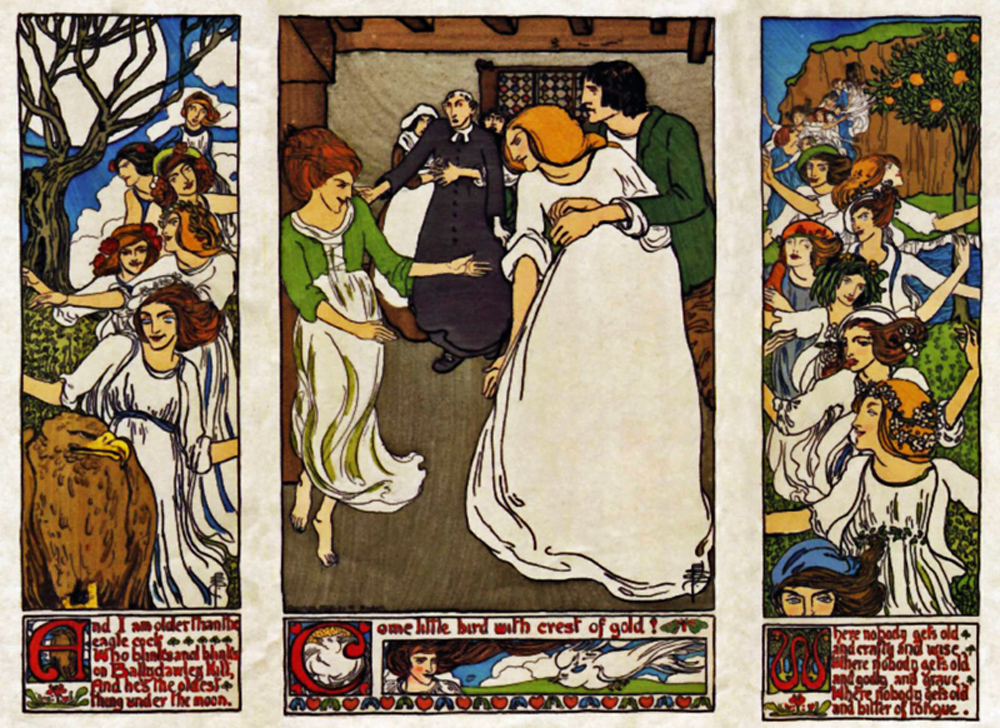
I created this illustration, above, for Wills’ poem The Land of Hearts Desire.
Oh, yes, I also dabbled in photography, and then found a great affinity for the ethereal, the esoteric calling to me like spirits from the past. Wills (an Irish literary legend whose birthday we commemorate today, no slight coincidence about that) belonged to a hermetic order, so he pulled me along, for as he said, I had a great spirituality about me, an otherworldly nature that he could not place. He was just certain I would be successful in my studies as an adept, and I would move up the levels to reach the enlightenment we all sought. Our stated goal: To see that which evaded human eyes beyond the senses, another world hidden right before us. I did not have the heart to reveal the fact that I came from such a world, yet had not the power to share it with my companions.
It was within the confines of the order of the occult that I met Arthur Waite, a genuine scholar of the esoteric—albeit less formally educated than his peers. He left school shortly after age 13, but as a young man, he read near everything in the Library of the British Museum, and thus began his attraction to psychical research. This coincided with the death of his younger sister, Francesca—a spirit that follows him in all his efforts though his eyes remain blinded, his spirit unaware. His endeavors were all the more heartfelt for that.
He has commissioned me, with great enthusiasm, to paint the artwork for a new tarot deck, something to which he claims great subconscious connection. The Sola Busca, the first tarot of the 1400s, served as his inspiration, for which he translated the Major Arcana, 22 cards. But he has left for me the remaining 56, to translate and illustrate as I am called. I will undertake these cards over the course of our correspondence here. It would give me great joy if you would join me each week. Arthur knows not of my origins—I would appreciate your discretion; if you don’t mind, we shall keep my identity as mythological creature of Ireland just between us.
Yours, as sincere as a púca can be,
Pamela Colman Smith
 Shelagh Braley Starr